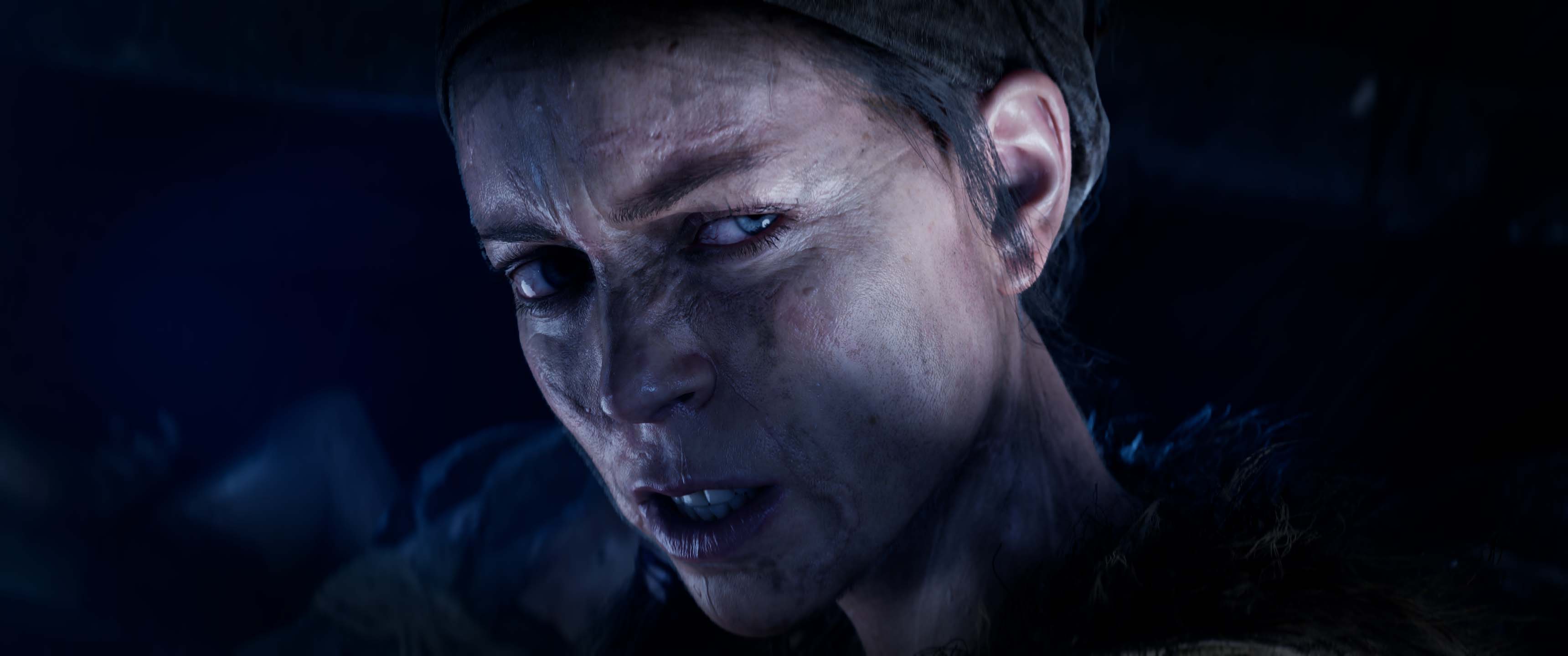
Ninja Theory didn't just build one of the most visually uncompromising games of this generation — they gave it a photo mode worthy of it. A 3-point lighting system, full character positioning, and a world built on photogrammetry and Lumen. This is what it looks like when tools match ambition.
In this review
Hellblade II's photo mode feels less like a checklist of features and more like an extension of the game's tone.
KeenEyeVP, @keeneyevp
Ninja Theory set out to make one of the most visually uncompromising games of this generation — and they delivered. Senua's Saga: Hellblade II is built on Unreal Engine 5 with photogrammetry environments, Lumen global illumination, and a level of cinematic intention in every frame that makes it one of the most naturally photogenic games ever made. The photo mode matches that ambition. It invites you to slow down, look carefully, and find what the world is hiding in the dark.
Available on Xbox Series X|S and PC since May 2024, and on PlayStation 5 from August 12, 2025 — with the Enhanced update bringing new photo mode improvements across all platforms — this is the definitive version of a photo mode that was already exceptional.
The Lighting System — Where It Earns Its Score
This is the headline feature and it earns that position. Hellblade II gives you a full 3-point lighting setup — up to three lights per scene, each with individual intensity, hue, and saturation controls. The lights are visualised in-world, which means you're not guessing where the light is falling. You can see it, move it, and shape it in real time across two tabs of the UI.
The system rewards a photographer's instinct for where light matters. Drop a cool rim light behind Senua to separate her from a dark volcanic landscape. Add a warm practical source from below to push mood. Dial intensity down to something that just catches the edge of her face without revealing too much. The Illuminate setting lifts darker areas just enough to reveal detail without flattening the image — it's particularly useful in scenes where contrast is doing narrative work.
Combined with hue and saturation controls, you can push colours toward realism or slightly beyond it for effect. The system is flexible and encourages experimentation rather than guiding you toward a single look. No other game in this tier gives you this level of lighting control this gracefully.
Camera Freedom
The free camera is generous. Lateral movement, pan, tilt, and vertical craning all work naturally through an intuitive combination of analogue sticks and triggers. There are a handful of sections where camera movement is locked by the game's structure, but these are the exception. In most situations you have genuine compositional freedom across a world that was designed with visual intention at every level.
What makes this particularly effective is what the camera is pointed at. Iceland's volcanic landscape, the brutal overcast weather, the quality of diffused light on photogrammetry surfaces — Lumen means the ambient lighting in any given scene is already doing extraordinary things. The photo mode gives you the tools to find the best angle into it.
Character Controls
Senua can be toggled on or off entirely, giving you the option to photograph the environment without her in frame. When she's visible, full 360° rotation and three-axis positioning — North/South, East/West, and Up/Down — let you make precise adjustments. The range on each axis is around 20cm, which is modest but enough for fine-tuning a composition without breaking the scene.
Allies and enemies can be adjusted separately, which opens up scene-building possibilities that go beyond a simple portrait. Small adjustments to Senua's position and rotation make framing easier without breaking immersion. The controls are restrained by design — this is a game about stillness and weight, and the character tools reflect that.
Depth of Field
Simple but effective. Precise Focus Assist lets you lock focus on specific elements, which works particularly well for close-ups and detailed shots where the margin between the right focal point and overshooting it is small. Autofocus handles quicker setups reliably without requiring manual intervention.
Adjustable depth of field strength helps separate characters from their surroundings, giving a subtle sense of scale without drawing attention to the mechanics. The system is understated by design — it serves the shot rather than announcing itself.
Filters, Effects & Motion
The filter range goes from understated to slightly stylised — enough room to refine visuals without locking you into a particular look. Aspect ratios influence framing more than you might expect. Weather effects like rain and fog add genuine depth to scenes, and in a game where Icelandic weather is half the visual identity, having access to those conditions in photo mode matters.
Motion controls let you capture movement smoothly. Camera direction and speed can be adjusted to create slow atmospheric sweeps or quicker, more energetic passes. Even small adjustments make a scene feel deliberate — adding a cinematic quality without extra effort.
This video plays from YouTube, which sets its own cookies. You turned those off.
Verdict
Senua's Saga: Hellblade II — Beauty hides in darkness.
Hellblade II's photo mode is built to support storytelling rather than spectacle. The 3-point lighting system is the standout — genuinely class-leading in how it lets you sculpt mood and atmosphere with precision. The character controls are restrained but purposeful. The camera is generous where it matters. And the world it gives you to photograph is one of the most visually deliberate in recent gaming.
This is a photo mode that knows exactly what game it's serving. The result is a toolset that feels intentional at every level — encouraging careful framing, subtle adjustments, and a strong sense of mood. For portrait work, atmospheric environmental photography, and anything that benefits from controlled lighting, Hellblade II is a reference-grade experience.